
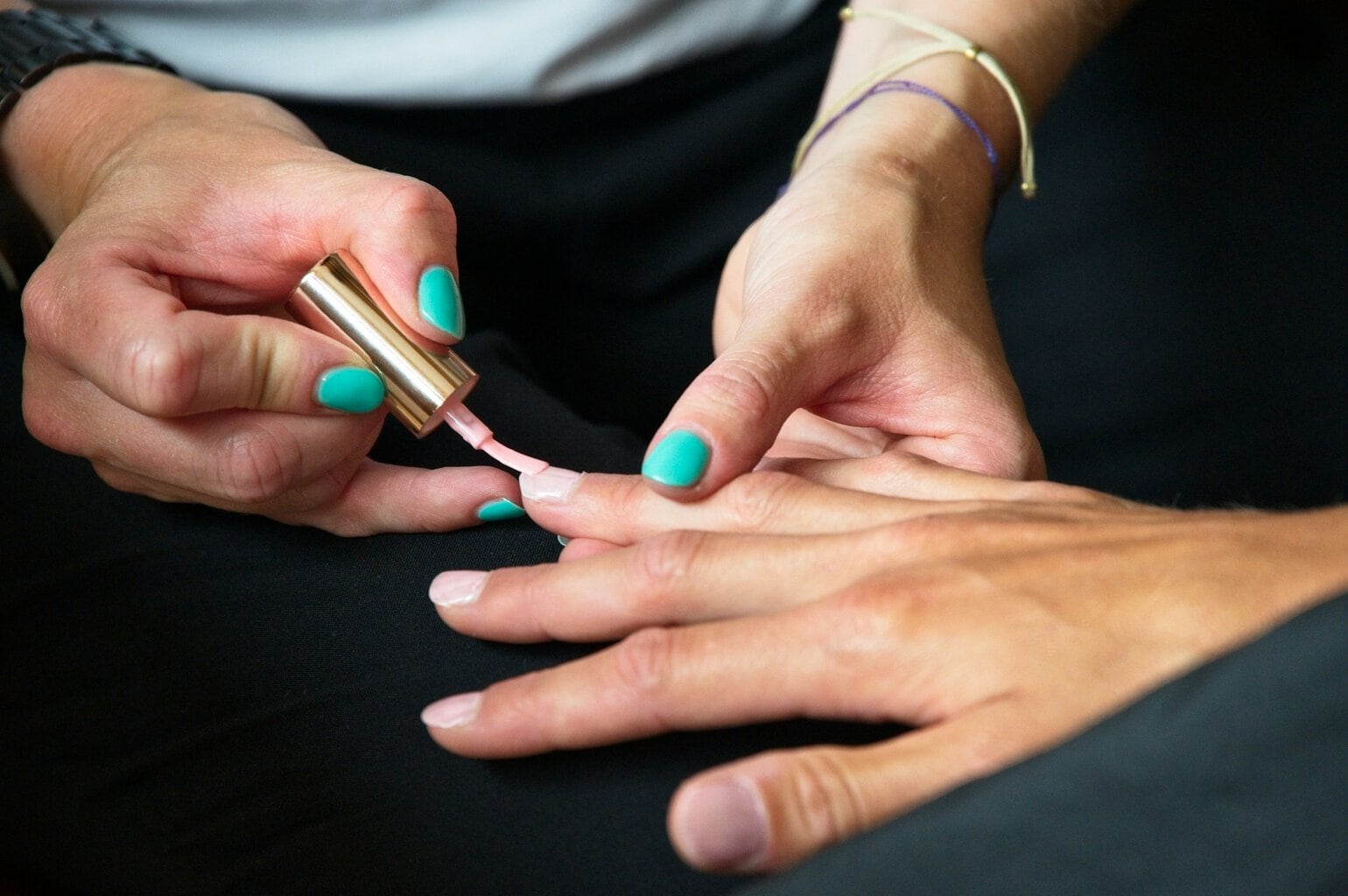
Challenging dominant narratives of human trafficking and tax evasion, nail salons can be understood as part of migrant women's strategies for navigating discriminatory labour markets and care responsibilities.
As in many other countries, nail salons have become an increasingly visible feature of urban life in Finland’s larger cities. They are often owned and staffed by migrant women, and sometimes men, primarily from Southeast Asia, especially Vietnam, and increasingly from Eastern Europe, particularly Ukraine.
The nail salon industry has expanded rapidly in recent decades, becoming one of the fastest-growing service sectors in Europe and the United States. Valued at 15.07 billion US dollars in 2025, the global nail salon market is projected to double by 2034.
Our research on nail salons as sites of migrant (self-)employment has prompted a range of public responses. While beauty services are now a routine part of everyday life for many people, the working conditions and experiences of those who provide these services often remain invisible. In our research, we explore why nail salons have expanded and what this tells us about changes in work and employment today.
Since the funding decision was announced, the research project has attracted considerable public engagement and media attention. Much of this coverage, however, has gravitated towards sensationalist narratives, in which nail salons and the migrant women who work in them are viewed primarily through the lenses of illicit economic activities, trafficking, sexualised labour, or tax evasion. In other cases, work in nail salons was dismissed as a trivial ‘women’s issue’ rather than recognised as work worthy of serious attention.
We reflect on the tendency to sensationalise and exceptionalise migrant work and address two persistent myths that frequently accompany public discussions of nail salons through the reactions to our research.
The first casts migrant-run nail salons as sites of human trafficking and exceptional exploitation. The second portrays them as fronts for tax evasion and other illicit economic activities.
Our findings support neither of these assumptions. Instead, our ongoing research suggests that nail salon work, which is largely organised through self-employment, should be understood in relation to labour market marginalisation, care responsibilities that fall on women, and border regimes that require non-citizens to keep a regular status through work.
In Finland, immigration rules for self-employed migrants impose strict requirements, particularly regarding proof of income and business viability. In other words, nail salons are not an exception but rather an expression of the dynamics of Finland’s contemporary labour market that migrant women must navigate.
Exceptionalising exploitation of migrant workers
In Finland, recent media coverage and official reports have repeatedly exposed labour exploitation and unsafe working conditions in sectors such as food production, agriculture, cleaning, and hospitality, many of which rely heavily on migrant and racialised workers.
As doctoral researcher Dionysia Kang also writes, these cases are often met with shock, disbelief, and moral outrage. This framing presents them as isolated incidents rather than as examples of wider structural problems. Similar reactions often occur in discussions of nail salon work.
Shock can distract attention from the social, political, and economic conditions that make such exploitation possible. Presenting these cases as exceptional risks are reinforcing the idea that exploitation is unusual and exceptional.
Research shows that entire branches of the economy, from food production and delivery to other services, rely on workers whose freedom and opportunities are restricted by immigration and employment regulations, as well as discrimination based on race, gender and citizenship status.
Myth 1: Migrant workers in nail salons are victims of human trafficking
Some investigative journalism reports, such as YLE’s MOT program, “Kauniiden kynsien hinta”, explore low-income jobs through interviews with Vietnamese nail technicians. While it sheds light on pressing social issues, the program oversimplifies the situation by portraying migrant workers merely as victims of human trafficking orchestrated by networks within their own ethnic communities.
Our research does not assess actual incidents of human trafficking in nail salons. As other researchers have noted, collecting empirical data on and evaluating such claims is notoriously difficult. While we do not wish to diminish the seriousness of forced labour, we are critical of portraying foreign workers as trafficking victims. Our research participants described such representations as stigmatising, victimising and offensive.
Contrary to these assumptions, most of the workers we interviewed operated as self-employed sole traders, with only a small minority directly employed by salons. Employment contracts are relatively uncommon in the beauty sector, as salon owners often lack sufficient and stable profits to cover employers’ social security contributions.
Earnings tend to fluctuate considerably across seasons, with periods such as Christmas season generating high demand, followed by quieter months, particularly January, when clients typically reduce spending on non-essential beauty services.
Most workers in the field operate as self-employed contractors, either paying a fixed rental fee for a workstation or sharing a proportion of their earnings with salon owners, who provide the workspace, materials, and customer base.
Self-employed workers are responsible for financing their own social security while also covering a range of business expenses, including workspace rent and utilities, materials, accounting services, and even payment terminal and booking platform fees. According to our interviewees these costs can absorb up to 60 % of their earnings, leaving them with an income that is equivalent to or lower than base minimum salaries in other branches.
By becoming self-employed, migrant workers create their own jobs, while paying for their own social security.
In Vietnamese salons, the price of a gel manicure is typically around 27 euros. After deducting expenses such as value-added tax (VAT), rent, material costs, other taxes, and self-employment insurance, a worker’s earnings amount to only 7.50 to 9.50 euros per hour.
The fact that workers are mostly self-employed also create conditions for (self-)exploitation. Without the protections available to employees by the Labour Law, self-employed workers work longer hours, sometimes up to 9–11 hours to earn a living wage after tax and other payments needed to run the business.
Simply put, by becoming self-employed, migrant workers create their own jobs, while paying for their own social security.
This runs counter to the common stereotype that ‘migrants drain welfare’. Not only our research participants pay for their own social security, but they also create their own jobs.
Registered self-employment or employment contracts are needed for the renewal of residence permits for those who do not have Finnish or EU citizenship. This brings us to the second myth accompanying nail salons – tax evasion.
Myth 2: Migrant workers in nail salons evade taxation
Another common assumption is that nail salon workers evade taxation. Yet the people we spoke to were often deeply concerned about complying with tax regulations and avoiding administrative mistakes.
Many feared that errors could result not only in financial penalties but also affect future residence permit or citizenship applications.
Our research participants often reside in Finland based on work or self-employment residence permits, which requires them to show sufficient income when applying and renewing their permits.
For example, under Finnish Immigration Service regulations, entrepreneurs in Helsinki are required to have a minimum net income of 1 210 € per month, equivalent to approximately 15 000 € per year. The required income increases when applicants sponsor additional family members, including spouses and children.
For many migrant workers, maintaining legal status requires carefully documenting their income and demonstrating compliance with tax and regulatory requirements.
The authorities also closely assess the viability of the business. Some cases in our study indicate that applicants may face longer processing times and requests for additional documentation, or even have their applications refused.
This means that workers’ economic activity and officially documented income are in fact checked by the migration officials to be eligible for a regular status in Finland.
When considering this aspect of migration controls, tax evasion offers little benefit, carrying a high risk of penalties and negative outcomes when applying for residence in Finland.
A common assumption on tax evasion therefore fails to capture how migrant entrepreneurship is also governed through migration controls: for many migrant workers, maintaining legal status requires carefully documenting their income and demonstrating compliance with tax and regulatory requirements.
Nail salons operating as normal
Our research shows that migrant women’s precarious entrepreneurship in nail salons is both a form of resistance to exclusion from the labour market and a way of accommodating to limited employment opportunities. They also seek ways out of other feminised and racialised sectors of work, such as cleaning and elderly care, which many experience and perceive as even more exhausting and draining.
Some of our participants turned to nail salon work after years of working in elderly care and cleaning, seeking what they saw as more autonomy, dignity and better working conditions. Turning to nail business often becomes a way of navigating and resisting being steered into low-paid and low-status work with little control and autonomy.
Despite relative flexibility compared to other forms of employment, self-employment entails the individualisation of economic risks and responsibility for social protection.
Self-employment in the beauty sector is often perceived as a viable option in the absence of other opportunities for waged work and, in many cases, after childbirth, as women seek greater flexibility and opportunities in balancing paid work with care responsibilities that continue to disproportionately fall on women. Finally, many women see it as a way out of unemployment and discriminatory labour markets that push migrant women to start their own businesses.
Despite relative flexibility compared to other forms of employment, self-employment entails the individualisation of economic risks and responsibility for social protection. In fact, many women told us that they could not afford taking sick leaves or holidays as they would lose on their income while they still had to pay all the expenses related to running their own businesses.
Despite these difficulties, our research participants talked with passion about the creative aspects of their work and the satisfaction of caring for other people. They often spoke in detail about the intricate skills the profession requires, as well as the craft involved in creating aesthetically pleasing designs that are both durable and of high quality.
Accommodation to the rules of the market
Treating working conditions in nail salons as unusual hides the fact that they are part of how labour markets often work for migrant and racialised women. It also ignores the many ways these women cope with, navigate, and challenge discrimination, childcare responsibilities, unemployment, and the limited opportunities available to them.
In this context, self-employment often becomes a way of navigating limited opportunities while simultaneously transferring the risks of entrepreneurship and responsibility for social protection onto individual workers.
Studying nail salons can then shed light not only on the workings of the Finnish labour market but also forms of accommodation to and resistance to inferior conditions through the entrepreneurial means.
Daria Krivonos is an Academy Research Fellow and a PI of “Manicuring Intimacy: Femnised Labour, (Self-)Care and Racialised Encounters in Nail Salons” (RCoF, 2025-2029). She works at the University of Helsinki.
Thu Nguyen in a doctoral researcher in “Manicuring Intimacy: Femnised Labour, (Self-)Care and Racialised Encounters in Nail Salons” (RCoF, 2025-2029), based at the University of Helsinki.
Article image: Stefan Lehner / Unsplash
Article updated 28.10.2026 at 12.40: Corrected misspelling (Dionysia Kang).