Three significant, but very different works beyond the headline picks circulate questions of voice and history.
Am I calling you at a bad time? (2024). Director: Martta Tuomaala, Finland
All the Light That Remains (2025). Diector: Moona Pennanen, Finland
Spirits / Vuoiŋŋat (2025). Directors: Marja Viitahuhta, Ánnámáret, Turkka Inkilä, Ilkka Heinonen, Finland
DocPoint Helsinki Documentary Film Festival turns twenty-five this year, and the anniversary edition lands in Helsinki from 3rd to 8th of February 2026. Across more than a hundred films, the program combines Finnish premieres from the international selection with domestic films, organized across international, national, and short film competitions.
Out of this year’s submissions, I had the chance to review three significant but very different works, each circling questions of voice, history, and what the camera can and cannot responsibly claim. Taken together, they make a strong case for catching the festival beyond the headline picks. Enough of the setting, now for the calls, the ruins, and the ghosts.
Am I calling you at a bad time? (2025)
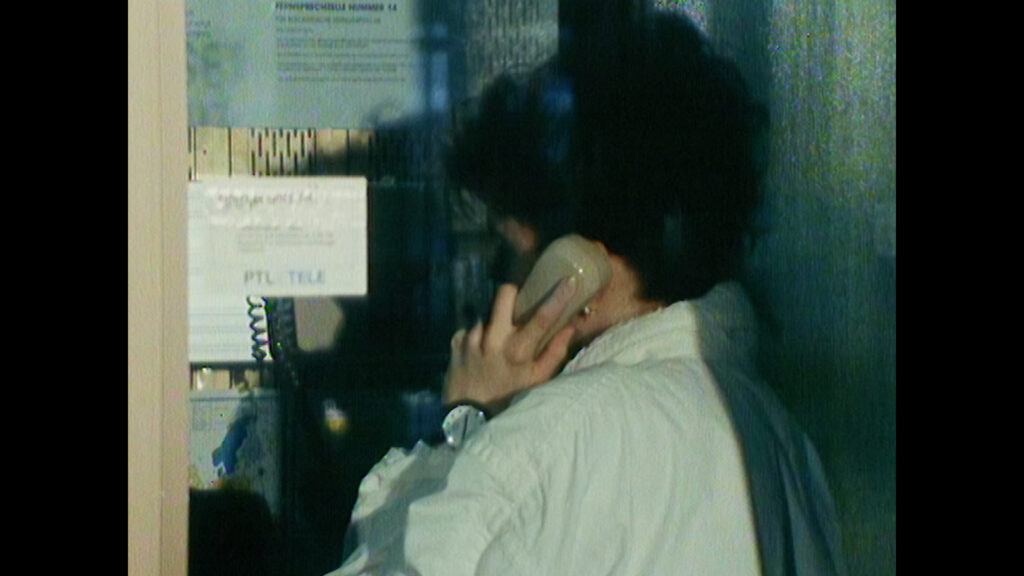
Image: Still from Am I calling you at a bad time? (2025) /DocPoint
I first saw Martta Tuomaala’s work last year in a Helsinki gallery, in a tiny dark room that smelled faintly like the offices the unnamed narrator remembers from the 90s. Later, over coffee, a friend asked what it was about. I said it was about a voice learning how to behave. That reductive description feels more accurate after re-watching the work.
Am I calling you at a bad time? [En kai huonoon aikaan soittele?] is a creative documentary that follows a brief stretch of an unnamed narrator’s early working life, an unlikely coming of age story where adulthood arrives with a headset. Our accidental protagonist begins as a telemarketer at the age of 15, then moves through phone sex work, telephone surveys, and ends up in sales.
Though the roles change, “the phone” stubbornly stays put in her story. In terms of form, the work is not a documentary in the strict sense so much as a performed non-fiction or a stylized staging of reality, but let us keep the familiar term, documentary, in this text.
The weight of the work is mainly carried by a playful voice actor, who also happens to be the director and writer, and who wrestles with the Finnish language itself, stretching its rhythms and intonations until it becomes spirited rather than flat. The frisky voice-over often comes to the work’s rescue, as the piece relies heavily on archival images and amateur footage that can at times feel irrelevant or distracting.
The consistent color grading and the decision to keep the narrator faceless sit comfortably with the narrative and with the lived experience of the narrator, let us call her X. We are deliberately kept at a certain distance from X, as the work feels autobiographical without ever becoming self-examining or confessional. Still, its most affecting moments arrive when the work turns inward, such as when X reflects on the effects of her job on her psyche and admits that working as a phone sex operator made her suspicious of her male friends, wondering whether they belonged to the same group of creeps.
Between the jesting lines of voice narration, Tuomaala delivers sharp commentary on mental health, loneliness, and the narrow range of opportunities available to women in Finland’s industry-driven economy of the 80s and 90s.
Between the jesting lines of voice narration, Tuomaala delivers sharp commentary on mental health, loneliness, and the narrow range of opportunities available to women in Finland’s industry-driven economy of the 80s and 90s.
The work is at its most pointed when it turns to everyday gender dynamics. This comes through when X recalls being asked to soften (feminize) her deep voice to increase sales, being told off in a job interview for not wearing make-up or dressing like the other women in the office, or when she deliberately mispronounces the name of a tractor brand in order to keep massaging the masculine ego of the customer on the other end of the phone. X’s experiences belong to the 90s only on paper. In practice, they extend easily into 2026. So yes, now is exactly the kind of time this call should happen.
Thinking back to that first viewing in that small gallery, it feels fitting that the work resists a clean ending. Like a phone call that ends without a clear goodbye, it cuts off mid rhythm, leaving the line oddly open. X’s phone sex chapter brings to mind Judy in Spike Lee’s Girl 6 (1996), especially when Judy is coached to sound more like a stereotypical white woman. The difference is that Tuomaala, quite understandably, never makes you feel for X in the same way.
Although the ending is slightly awkward, the original music that closes the piece helps absorb that jolt. The work, overall, invites speculation about what it chooses not to pursue. There is room to wonder how it might have evolved more creatively through bolder formal decisions, particularly in its dealing with archival material and the supplementary shots that feel more utilitarian than considered.
Yet these limitations somehow settle into the work’s internal logic and allow it to function as a cohesive whole with its own peculiar style rather than a loosely stitched pastiche of the 90s. Yes, the call may at times feel awkward, but the voice behind the call knows what it is doing after all.
All The Light That Remains (2025)
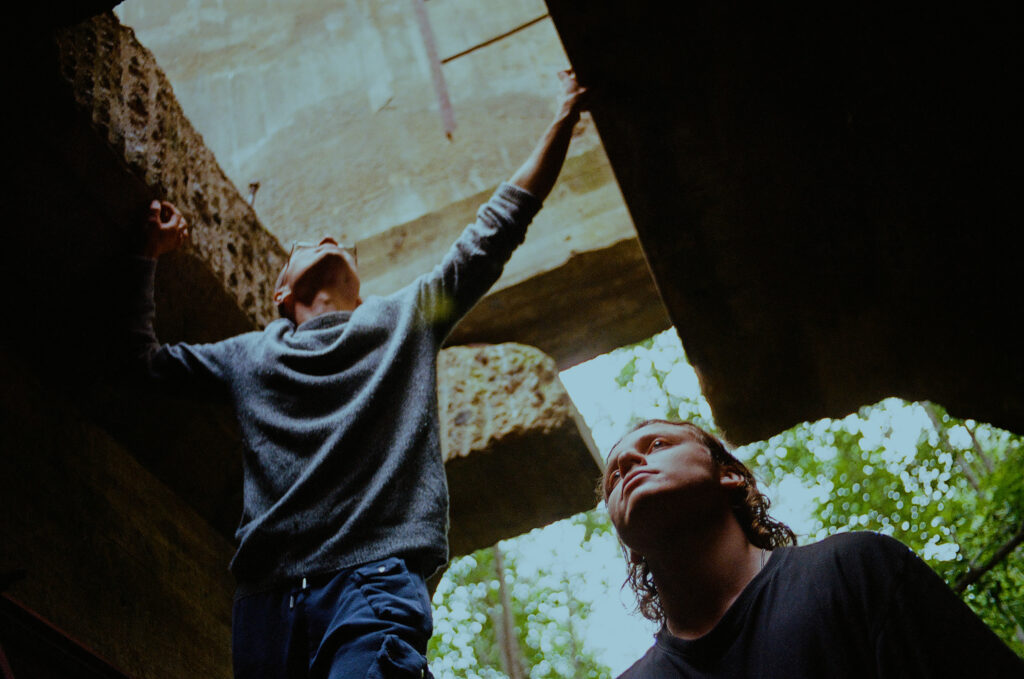
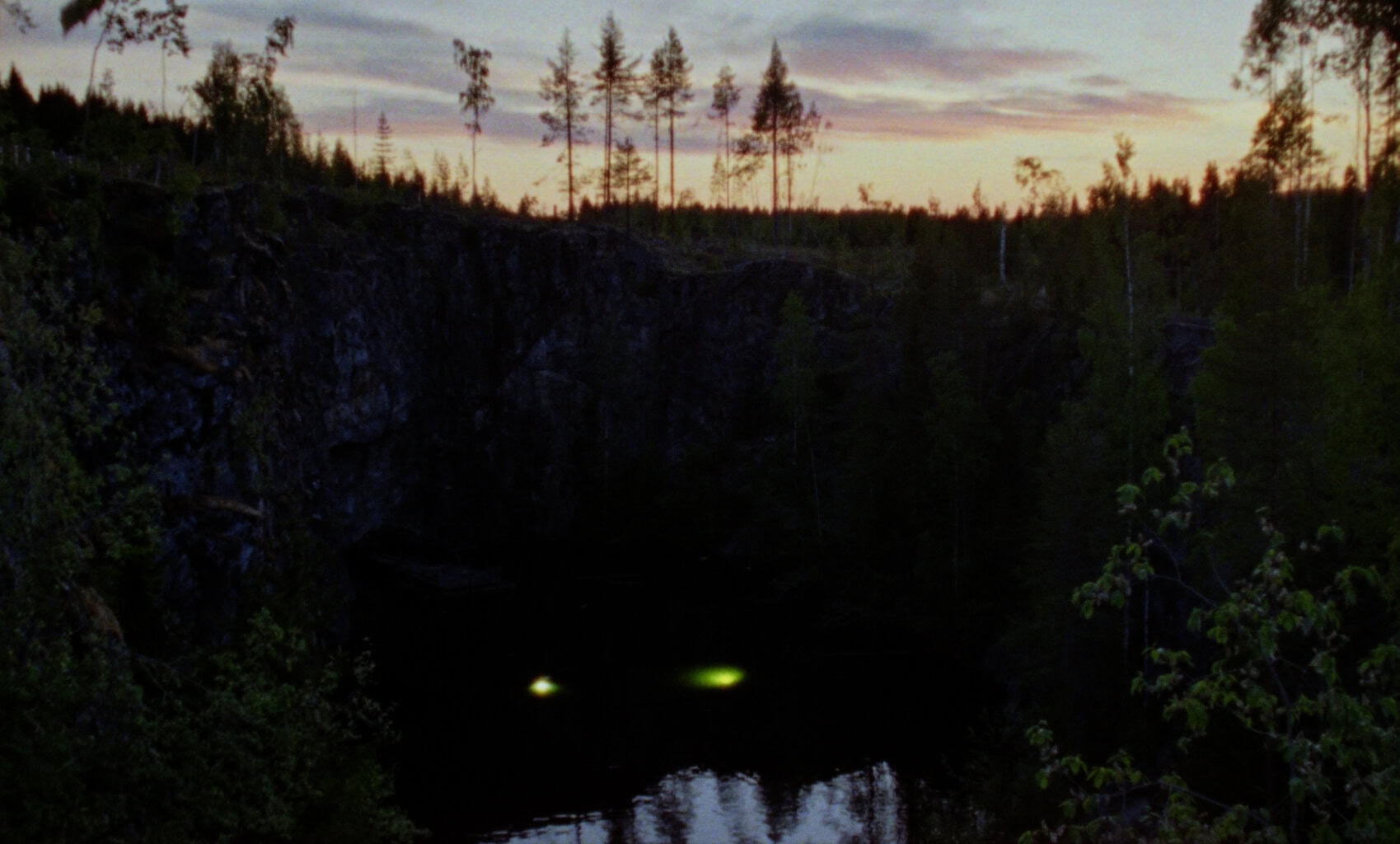
Image: Still from All The Light That Remains (2025) / DocPoint
There is always something austere about films that begin from the idea of what remains. Moona Pennanen’s All The Light That Remains [Kaikki jäljelle jäävä valo] holds onto that formally restrained space early on, and asks the viewer to stay with the aftermath instead of chasing explanations. For a young filmmaker, that is an ambitious way to claim a voice. What sticks around after the 25-minute runtime is the mood the film generates, and much of that effect comes from Jesse Jalonen’s eye-catching cinematography and Pennanen’s consistent pacing. Taken as a whole, the film points to a personal style of working that does feel well thought-out, and it is a pleasant surprise to see that kind of clarity for such an early work.
All the Light That Remains is a hybrid documentary set in the abandoned mining village of Mätäsvaara, where the present collides with an uneasy past. The film opens with a group of young Ukrainians arriving by van. It never clearly spells out who they are or why they are there. At first they could pass for a group on a field trip, but through small visual cues and narrative detours, the film allows the viewer to infer that they are seasonal workers brought in for reforestation.
When the main character Oleksander enters the communal building where they are staying and finds an empty room, he meets another newcomer, Mykyta. The two form a loose duo, wandering around the village and picking up fragments of its history along the way. As they move through the village, they cross paths with a couple of Finnish geologists surveying the mine for a possible reopening, as rising molybdenum prices have brought new attention to the site.
Before going further, some context for Politiikasta readers can be useful. Mätäsvaara is located in Lieksa, North Karelia, on the eastern side of Lake Pielinen near the border with Nurmes. It was built rapidly during the wartime period as a purpose-made mining community, with housing and basic services organized around the mine itself.
The question is rather how far a work presented as “documentary” can go in bending historical specificity for emotional effect, and where that line begins to matter?
Today, the Finnish Heritage Agency lists Mätäsvaara as a nationally significant built cultural environment, mainly because its town plan was designed by Alvar Aalto. The mine operated as a molybdenum sulfide site and played a role in the German wartime industry. Molybdenum is used in alloy steels, including those required for arms production. A Lieksa city guide also marks the location of an “old prison camp” and notes that prisoners of war were brought to the mine as labor. During the Continuation War, Finland held roughly 64,000 Soviet soldiers as prisoners of war, along with about 5,700 taken during the earlier Winter War.
What matters for the film, however, is how this history is recorded. In official Finnish and international sources, these prisoners are not listed by modern national identities. They are consistently described as “Soviet prisoners of war”. In Finnish archives they appear as neuvostosotavangit or neuvostoliittolaiset sotavangit. In some cataloguing practices, the label “Russian” is used as a practical shorthand, even though broader historical accounts continue to frame them as Soviet prisoners.
Even an older MTV3 feature on a musical set in Mätäsvaara, for example, refers to “Russian prisoners of war” working at the mine in the summer of 1944. Against this background, Pennanen’s decision to foreground a specifically Ukrainian identity in the film for these prisoners appears to be deliberate. It intensifies the emotional weight of the setting and strategically taps into the current resonance of Ukrainian identity in Europe (without this adjustment the film’s structure falls apart). Is this a flaw? Not necessarily.
Cinema has always depended on dramatization, on bending and compressing reality in order to make it felt. The question is rather how far a work presented as “documentary” can go in bending historical specificity for emotional effect, and where that line begins to matter?
The film invites real questions, and only a work that aims high enough ever does that.
The film seems caught between two impulses that pull in opposite directions and they end up cancelling each other out, undermining the film’s overall coherence. As noted earlier, much of the film’s weight is carried by its beautiful cinematography, evident, for example, in the camera movement in the forest, wide shots at the beginning and the atmospheric cutaway shots toward the end. In its technical approach, these moments recall another film with “light” in its title, All We Imagine as Light, awarded the Grand Jury Prize at Cannes in 2024.
The other pull comes from the script, which fails to rise to the level of the visual work and instead drags the film down. Rather than trusting the images, the script clings to them as a way to force its themes through. Its ideas about time, space, and inherited suffering are pushed so insistently through bland over-explanation that the visual language begins to suffocate under the weight. Artificial staging and poorly ordered dialogue only add to the problem. As cinematography reaches for subtext, the script uncreatively spoon feeds the audience with meaning (for example by long verbal padding about “grains”), and the two never stylistically align.
The clunky editing only amplifies the script’s weaknesses. The two geologists are poorly integrated into the narration, appearing like summoned ghosts who surface now and then to recite background information. Rather than enriching the film, they interrupt its visual logic. The opening quote from The Man Without Qualities does important work, grounding the film in an idea of time piling up beneath us while we pretend to stand on something stable. Yet it is hard to ignore that the real men without qualities here are the people on screen themselves, reduced to particles by a romanticized gaze. The world around them remains intact with its traumas, continuing to reproduce hierarchical ways of seeing, while even nature is stripped of specificity and turned into a symbolic pressure placed on the characters.
If this review runs longer than the others, it is because the film invites real questions, and only a work that aims high enough ever does that. For all its tensions, the film leaves a clear impression and makes Pennanen a filmmaker worth paying attention to right now.
Vuoiŋŋat (2025)
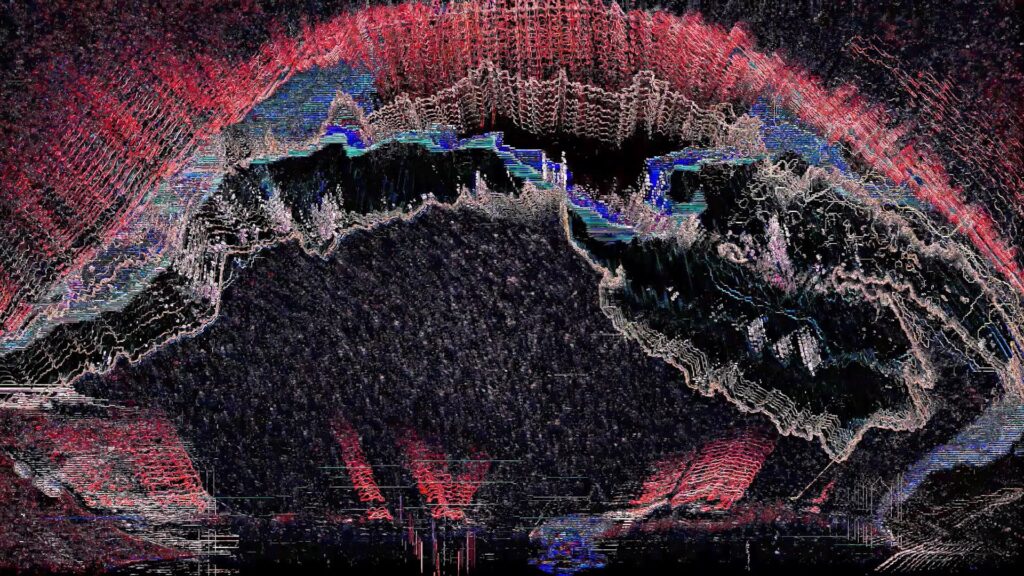
Image: Vuoiŋŋat (2025) / Docpoint
Marja Viitahuhta’s Vuoiŋŋat reminds us of a dark chapter in European history, particularly in the late nineteenth and early twentieth centuries, when a documented movement now known as “scientific racism” used pseudo-scientific authority to justify imperialism, colonial domination, and ideas of white superiority, while legitimizing discrimination, the collection of human bodies, and state policy.
Germany became an early center for this thinking, with the founding of the German Society for Racial Hygiene in 1905 by Alfred Ploetz, promoting concepts of “racial health” and “purity” that later intensified across Europe in the 1930s. In the Nordics, a key milestone was the establishment of the State Institute for Racial Biology in Sweden’s Uppsala in 1922, led by Herman Lundborg, one of the most influential race scientists of the period. In this period, the Sámi population was systematically targeted by racial biology research through physical measurements and the removal of human remains.
In Finland, a major racial research program operated during the 1920s and 1930s under Professor Yrjö Kajava, during which approximately 37 percent of the Finnish Sámi population, totaling 795 individuals, were subjected to anthropometric measurement between 1926 and 1934. Within this context, grave disturbances are documented, including a 1934 anthropological expedition that exhumed seventy skeletons from the old cemetery island in Inari for study at the University of Helsinki. These remains later became the subject of long repatriation efforts, with ninety-five Sámi remains returned in 1995 and a further 172 repatriated in 2001 to the Sámi Museum Siida.
Although Vuoiŋŋat will not speak to everyone, what the work achieves through form deserves recognition.
In August 2022, Sámi human remains removed from burial grounds during the era of European racial science were reburied in Inari, Utsjoki, and Nellim in ceremonies led by Sámi communities in collaboration with church and state representatives. Viitahuhta dedicates her work to the Sámi ancestors whose remains were taken from their graves in the name of racial research.
Viitahuhta’s piece is a five-minute cameraless video built from animated digital auroras and a luohti performed by Sámi musician Ánnámáret, where the yoik gives voice to spirits that have been left without a place to rest. The title Vuoiŋŋat comes from the Northern Sámi word for spirits or life force, a term connected to the verb meaning “to breathe” and is used in Sámi cultural contexts to refer to ancestral or collective spirit. The Sámi political slogan ČSV includes the phrase Čájet Sámi Vuoiŋŋa! which is translated as “Show Sámi Spirit” where vuoiŋŋa is interpreted as “Sámi spirit” showing the word’s use to express presence or collective soul.
If you allow yourself to get lost into Viitahuhta’s experiment with form, the digitized images start to pull you in. Hold your gaze long enough and pareidolia kicks in. Shapes appear, and suddenly you wonder if the spirits are there on the screen, if they are watching you back, if one of them just waved at you.
Ánnámáret’s wordless vocalization carries the experience forward and holds it together. When her vocal register drops near the end into a deeper, grounded sound, it feels like another presence stepping in, as if a spirit is finally speaking plainly and letting its grief surface. Although Vuoiŋŋat will not speak to everyone, what the work achieves through form deserves recognition.
Rather than following a normative Western approach to her material, Viitahuhta’s work opens toward another way of thinking, one that the Japanese philosopher Kitarō Nishida helps put into words. As Nishida explained it, Western thought tends to treat form as being itself and formal completion as a measure of value, while East Asian thought allows for seeing the form of the formless and hearing the sound of the soundless. Without this kind of experimentation and had Viitahuhta adhered to a fixed Western ideal of form, the work would not reach the emotional force it carries.
Erfan Fatehi is a doctoral researcher in sociology at the university of Helsinki.
National Short Film Competition 1: The Verge of New, 2: Side by Side, and 3: Flashbacks are screened at DocPoint-festival between 3.–8.2.2026. Check the screening programme for showtimes.
Article images: DocPoint Helsinki
Read all Politiikasta DocPoint 2026 reviews in english here.
All Politiikasta DocPoint 2026 reviews in Finnish here.
Update 27.2.2026: Film names and link to screening schedule added